
Airport Security Communication for Deaf Travelers: A Screening Checkli

Table of Contents
- Understanding Your Rights
- Pre-Travel Preparation
- At the Security Checkpoint
- Communication Backups
- Where Hearview Fits
- Frequently Asked Questions
- Conclusion
Understanding Your Rights
Under the Americans with Disabilities Act (ADA) and similar laws in other countries, deaf travelers are entitled to effective communication during airport security screening. This means TSA officers must provide accommodations such as written notes, visual aids, or assistive technology to ensure you understand instructions and can respond appropriately. Knowing your rights helps you advocate for a smoother experience.
Pre-Travel Preparation
Preparation is key to reducing stress. Here are steps to take before you arrive at the airport:
- Request assistance in advance: Contact TSA Cares (1-855-787-2227) at least 72 hours before your flight to request a passenger support specialist. They can coordinate accommodations.
- Prepare a communication card: Create a laminated card stating you are deaf or hard of hearing and need visual instructions. Include phrases like “Please write down instructions” or “I cannot hear verbal commands.”
- Pack backup tools: Bring a pen and paper, a smartphone with a note-taking app, or a speech-to-text app. Ensure your devices are charged.
- Review TSA procedures: Familiarize yourself with standard screening steps (e.g., removing shoes, laptops, liquids) so you know what to expect visually.
At the Security Checkpoint
When you reach the checkpoint, use these strategies for clear communication:
- Present your communication card: Hand it to the TSA officer before any screening begins. This immediately signals your needs.
- Use visual cues: Watch for gestures, pointing, and demonstrations. TSA officers are trained to use non-verbal communication.
- Request written instructions: If you don’t understand a command, ask the officer to write it down. Most will comply.
- For identity verification: You may need to remove your hearing aids or glasses temporarily. Ask for visual confirmation of what to do next.
- During secondary screening: If selected for additional screening, you have the right to request a private screening and to have a companion present. Ask for written explanations of each step.
Checklist for the Checkpoint
- ☐ Communication card ready and visible
- ☐ Pen and paper or smartphone accessible
- ☐ Know the standard screening steps
- ☐ Identify yourself as deaf or hard of hearing immediately
- ☐ Request visual instructions if needed
- ☐ For pat-downs, ask for a visual demonstration or written description
Communication Backups
Even with preparation, technology can fail or officers may not be familiar with your needs. Have these backups:
- Smartphone apps: Use speech-to-text apps (e.g., Google Live Transcribe, Otter.ai) to convert officer speech into text. Show the app to the officer and ask them to speak clearly.
- Pre-written notes: Carry a small notebook with pre-written phrases like “I am deaf. Please write instructions.”
- Visual alarms and alerts: Some airports have visual paging systems for flight updates. Look for screens or ask for visual notifications.
- Travel companion: If possible, travel with a hearing companion who can relay information. Inform TSA that your companion is there to assist with communication.
Where Hearview Fits
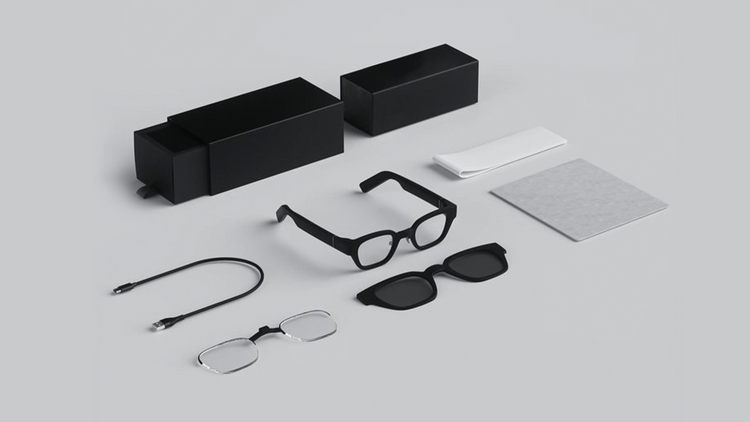
Hearview offers assistive technology that can enhance communication during travel. The MyVu Air Subtitle Glasses provide real-time captions of spoken conversation, displayed directly in your field of view. This can be particularly helpful during security screening when you need to understand verbal instructions without relying on an interpreter or written notes. The glasses are lightweight and compatible with smartphones, allowing you to pair them with speech-to-text apps for instant captions. While not a substitute for official accommodations, they serve as a personal tool to reduce misunderstandings. Always inform TSA officers if you are using such devices, as they may need to be removed during screening.
Frequently Asked Questions
Can TSA officers deny me entry if I cannot hear instructions?
No. TSA is required to provide reasonable accommodations under the ADA. If you cannot hear, they must use visual or written communication. If you feel your rights are violated, you can file a complaint with TSA or the Department of Transportation.
Do I need to remove my hearing aids during screening?
Hearing aids can typically remain on during screening. However, if you are selected for additional screening, you may be asked to remove them for inspection. You can request a visual demonstration of what to do and a private area for the process.
What if the TSA officer refuses to write instructions?
Politely reiterate your need for visual communication. If the officer continues to refuse, ask to speak with a supervisor. You can also file a complaint later. Carrying a communication card helps establish your request clearly from the start.
Conclusion
Airport security screening does not have to be a barrier for deaf travelers. By knowing your rights, preparing a communication card, and using visual tools like speech-to-text apps or captioning glasses, you can navigate the process with confidence. For an extra layer of communication support, consider the MyVu Air Subtitle Glasses from Hearview, which provide real-time captions to help you stay informed. Remember, you have the right to effective communication—plan ahead and advocate for your needs.
Practice the Communication Plan Before You Need It
A short practice run can reveal gaps that are easy to miss on paper. Choose a low-pressure time, explain the preferred communication method, test the device or written backup, and confirm how the other person should get your attention. Check lighting, distance, background noise, battery level, connectivity, and whether important details can be reviewed in writing. If the situation involves health, employment, travel security, or safety, identify the formal accommodation or trained professional responsible for effective communication; a personal tool is only one layer. Save essential names, questions, account details, and emergency contacts where they can be reached quickly. After the interaction, note what worked and what caused confusion. Adjust the plan rather than assuming the same setup will work everywhere. This rehearsal makes airport security communication for deaf travelers more predictable while preserving privacy, choice, and a reliable fallback.