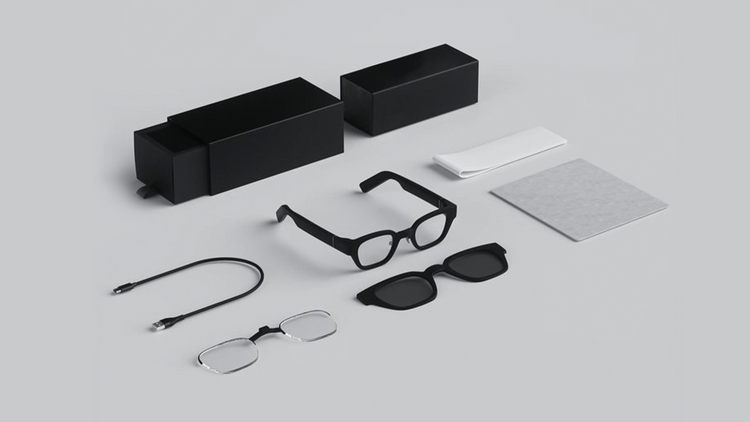

Caption Glasses for Cochlear Implant Users: Compatibility and Daily Us

Table of Contents
- Understanding Cochlear Implants and Visual Captions
- How Caption Glasses Work with Cochlear Implants
- Compatibility Factors: What to Look For
- Practical Tips for Daily Use
- Where Hearview Fits: A Visual Backup Option
- Frequently Asked Questions
- Conclusion: Building Your Personal Communication Plan
Understanding Cochlear Implants and Visual Captions
Cochlear implants are remarkable devices that provide a sense of sound to individuals with severe-to-profound hearing loss. However, even with advanced implant technology, listening in noisy environments, on the phone, or during group conversations can remain challenging. Many implant users rely on speechreading (lipreading) and other visual cues to fill in gaps. Caption glasses—also known as speech-to-text glasses—offer a new layer of visual support by displaying real-time captions directly in the user's field of view. This article explores how caption glasses for cochlear implant users can be a valuable addition to a personal communication plan, without replacing professional care or formal accommodations.
How Caption Glasses Work with Cochlear Implants
Caption glasses use built-in microphones and speech recognition software to convert spoken words into text that appears on the lenses. For cochlear implant users, this visual backup can be especially helpful when:
- Background noise is high: In restaurants, meetings, or social gatherings, captions provide a redundant stream of information.
- Speech is unclear: Accents, fast talkers, or unfamiliar voices become easier to follow.
- Phone or video calls: Captions can supplement the audio signal from the implant.
- Learning new environments: During rehabilitation or aural rehabilitation sessions, captions reinforce auditory training.
It's important to note that caption glasses are not a medical device and do not diagnose or treat hearing loss. They are an assistive technology that may complement your existing hearing solutions. Always consult your audiologist or hearing healthcare professional for personalized advice.
Compatibility Factors: What to Look For
When considering caption glasses for cochlear implant users, compatibility involves several factors:
- Hearing aid compatibility (HAC): Some caption glasses have telecoil (T-coil) or Bluetooth connectivity that can stream audio directly to your implant processor if it supports such features. Check your implant's specifications.
- Microphone placement: Glasses with directional microphones may pick up speech better in noisy settings.
- Display clarity: Look for adjustable font size, contrast, and positioning to avoid visual fatigue.
- Battery life: Consider how long you typically need captions during the day.
- Weight and fit: Ensure the glasses are comfortable for extended wear, especially if you already wear prescription lenses.
Below is a quick comparison checklist to help you evaluate options:
| Feature | Why It Matters |
|---|---|
| Bluetooth streaming | Direct audio to implant processor (if compatible) |
| Speech recognition accuracy | Higher accuracy means fewer errors in captions |
| Customizable display | Adjust text size and position for comfort |
| Noise cancellation | Better performance in loud environments |
| Prescription lens compatibility | Can be fitted with your prescription |
Practical Tips for Daily Use
Integrating caption glasses into your routine can take some adjustment. Here are practical suggestions:
- Start in quiet settings: Use the glasses at home with one-on-one conversations to get used to the captions.
- Pair with your implant: If your processor supports Bluetooth, pair the glasses to stream audio directly. This can improve synchronization between sound and text.
- Use as a backup, not a primary: Rely on your implant for hearing, and glance at captions when you miss something.
- Adjust positioning: Place the captions in your peripheral vision so they don't obstruct your view.
- Combine with speechreading: Captions can fill in words you might not catch visually.
- Plan for battery: Carry a charging case or power bank for longer outings.
Remember, caption glasses are a tool for personal convenience and do not replace formal accommodations like CART (Communication Access Realtime Translation) or sign language interpreters in professional or educational settings. For medical questions, always seek guidance from a qualified healthcare provider.
Where Hearview Fits: A Visual Backup Option
Hearview offers caption glasses designed with accessibility in mind. The MyVu Air Subtitle Glasses provide real-time captions using advanced speech recognition. While they are not a medical device and do not replace professional care, they can serve as a visual backup for cochlear implant users who want an extra layer of support in challenging listening situations. The glasses feature adjustable display settings, long battery life, and compatibility with prescription lenses. As with any assistive technology, we recommend trying them in your daily environments to see if they meet your needs. Always consult your audiologist to ensure they fit into your overall communication plan.
Frequently Asked Questions
Can caption glasses be used with any cochlear implant?
Caption glasses can be used with any cochlear implant as a visual aid, but direct audio streaming (e.g., via Bluetooth) depends on your implant processor's compatibility. Check with your manufacturer or audiologist. The glasses' microphones pick up speech from the environment, so they work independently of the implant's audio stream.
Will caption glasses interfere with my implant's processor?
No, caption glasses do not interfere with cochlear implant processors. They are separate devices that use microphones and display screens. However, if you use Bluetooth streaming, ensure there are no pairing conflicts. Always follow safety guidelines for electronic devices near medical implants.
Are caption glasses covered by insurance or as a workplace accommodation?
Coverage varies. Some workplace accommodation programs may consider caption glasses as assistive technology under the ADA if they are deemed reasonable. For medical insurance, they are typically not covered as they are not medical devices. Discuss with your employer's HR department or a disability advocate for guidance on accommodations.
Conclusion: Building Your Personal Communication Plan
Caption glasses for cochlear implant users offer a promising visual backup that can enhance communication in difficult listening environments. They are not a replacement for your implant, professional aural rehabilitation, or formal accommodations, but they can be a valuable addition to your personal toolkit. Start by assessing your daily challenges, consult with your audiologist, and consider trying a pair to see if they fit your lifestyle. For more information on Hearview's caption glasses, visit the product page. Remember, your hearing health journey is unique—work with professionals to find the best solutions for you.