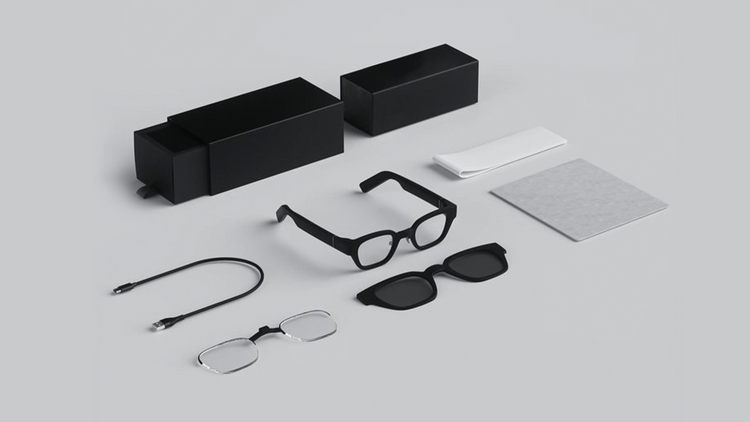

How Fast Can You Read Caption Glasses? A Readability Test Guide

Have you ever tried to follow a conversation with live captions on a pair of smart glasses, only to find yourself falling behind? You're not alone. Many people wonder, "How fast can you read caption glasses?" The answer isn't a simple number—it depends on your reading speed, the display settings, and the complexity of the conversation. This guide will help you understand the factors that affect caption readability and how to test your own reading pace to get the most out of your caption glasses.
Table of Contents
- Why Reading Speed Matters for Captions
- Average Reading Speeds and Caption Pacing
- Factors Affecting Caption Readability
- How to Test Your Reading Speed for Captions
- Optimizing Display Settings for Better Readability
- Where Hearview Fits: A Balanced Look
- Frequently Asked Questions
- Conclusion: Your Next Step
Why Reading Speed Matters for Captions
Live captions on glasses are designed to help you follow conversations in real time. But if the text appears faster than you can read, the captions become more of a distraction than an aid. Reading speed is the number of words you can read per minute (wpm) while still comprehending the content. For captions, your comfortable reading speed—not your maximum speed—is what matters. If you're reading at your limit, you'll miss visual cues, facial expressions, and other non-verbal communication.
Moreover, the nature of the conversation affects how quickly you can process the text. A simple chat about the weather is easier to read than a technical discussion filled with jargon. The Americans with Disabilities Act (ADA) guidance emphasizes that the nature, length, and complexity of communication should be considered when selecting an aid. This principle applies to caption glasses as well: you need to adjust settings based on the context.
Average Reading Speeds and Caption Pacing
Most adults read at an average speed of 200-250 words per minute for comprehension. However, when reading captions, you're not just reading—you're also listening and watching. This dual-task can reduce your effective reading speed. Research suggests that for optimal comprehension, captions should be displayed at a rate that is slower than your normal reading speed, often around 150-180 wpm.
Here's a quick comparison of typical reading speeds and their suitability for captions:
- Slow (120-150 wpm): Comfortable for most people, especially for complex conversations.
- Moderate (150-180 wpm): A good balance for everyday conversations.
- Fast (180-220 wpm): May be challenging for some, but possible with practice.
- Very Fast (220+ wpm): Likely too fast for live captions; you'll miss information.
Keep in mind that these are general guidelines. Your own comfortable reading speed may differ. The key is to find a pace that allows you to keep up without feeling rushed.
Factors Affecting Caption Readability
Several factors influence how quickly you can read captions on glasses:
- Font size: Larger fonts are easier to read, but they take up more space, which may limit how many words appear at once.
- Line length: Shorter lines are easier to track, but longer lines reduce the need for frequent eye jumps.
- Text color and background: High contrast (e.g., white text on dark background) improves legibility.
- Display position: Captions placed in your natural line of sight reduce eye strain.
- Scrolling vs. paging: Some displays scroll text continuously, while others show chunks. Scrolling can be smoother but may be harder to track.
- Conversation complexity: Technical terms, acronyms, and fast speakers increase cognitive load.
Understanding these factors helps you customize your caption glasses for maximum readability.
How to Test Your Reading Speed for Captions
To find your ideal caption pace, you can perform a simple test:
- Find a sample text with a known word count (e.g., a 200-word article).
- Set a timer for one minute and read the text at your normal pace, aiming for comprehension.
- Count how many words you read. That's your reading speed in wpm.
- Now, try reading the same text while watching a video or listening to audio to simulate the dual-task scenario. Note how your speed changes.
This gives you a baseline. When using caption glasses, start with a caption speed that is about 70-80% of your baseline. For example, if you read at 200 wpm, set captions to 140-160 wpm. Adjust as needed based on your comfort.
Optimizing Display Settings for Better Readability
Most caption glasses offer adjustable settings. Here's a checklist to optimize your display:
- Increase font size: Make the text large enough to read without squinting, but not so large that you only see a few words at a time.
- Adjust line length: Choose a line length that lets you read without excessive eye movement. A good rule of thumb is 40-60 characters per line.
- Enhance contrast: Use high-contrast color combinations like white on black or yellow on black.
- Position captions: Place captions in your central field of view to minimize eye strain.
- Choose scrolling style: Experiment with scrolling vs. paging to see which you prefer.
- Adjust caption speed: If your device allows, slow down the caption speed for complex conversations.
Remember, there's no one-size-fits-all setting. Take time to experiment and find what works best for you.
Where Hearview Fits: A Balanced Look
Hearview offers the MyVu Air Subtitle Glasses, designed to provide real-time captions in your field of view. While we can't promise perfect transcription—no speech-to-text system is 100% accurate—these glasses are built with readability in mind. They feature adjustable font sizes, multiple display modes, and a comfortable design that allows you to maintain eye contact while reading.
If you're looking for a device to help you follow conversations more easily, consider exploring the MyVu Air Subtitle Glasses. They offer a range of customization options to suit your reading speed and visual comfort. As with any assistive technology, it's important to try them and see if they meet your needs.
Frequently Asked Questions
1. What is the average reading speed for captions?
Most people read at 200-250 wpm, but for captions, a slower pace of 150-180 wpm is often more comfortable. It's best to test your own speed and adjust accordingly.
2. Can I increase my reading speed for captions?
Yes, with practice you can improve your reading speed. Start by reading at a comfortable pace and gradually increase the speed. However, don't sacrifice comprehension for speed.
3. Do caption glasses have adjustable text size?
Many caption glasses, including Hearview's MyVu Air, offer adjustable font sizes. Check the device's settings to customize the display to your preference.
Conclusion: Your Next Step
Reading captions on glasses is a skill that improves with practice and proper settings. By understanding your reading speed and optimizing your display, you can enhance your experience with caption glasses. Remember, the goal is to stay engaged in conversations, not to read at maximum speed. If you're considering caption glasses, take the time to test different settings and see what feels right for you. And if you have questions about your hearing health, always consult a professional for guidance.
Ready to explore caption glasses? Check out the MyVu Air Subtitle Glasses to see if they fit your needs.