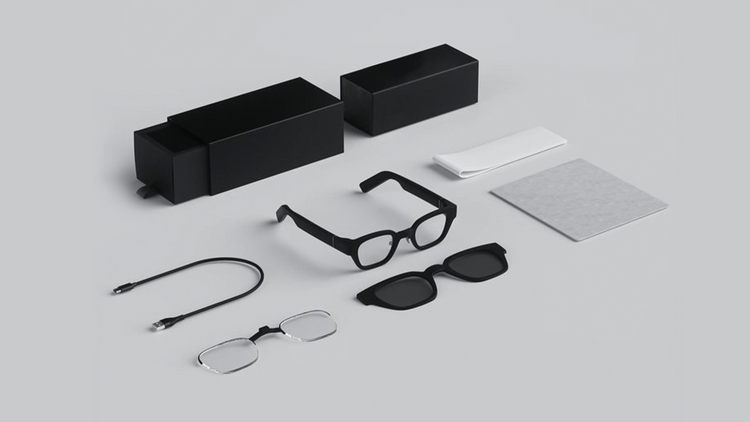

Caption Glasses vs Live Transcribe Apps: Which Works Better for Real C

For people with hearing loss, following real-time conversations can be exhausting. You might rely on lip reading, ask for repetition, or use a smartphone app that transcribes speech. But phone apps have limitations—they require you to hold the device, glance away from the speaker, and deal with background noise. Caption glasses, like those from Hearview, offer a hands-free alternative that displays captions directly in your line of sight. This article compares caption glasses vs live transcribe apps across key factors: convenience, accuracy, privacy, and real-world usability. By the end, you'll know which solution works best for your daily conversations.
How Caption Glasses and Live Transcribe Apps Work
Live Transcribe Apps (e.g., Google Live Transcribe, Otter.ai) use your phone's microphone to capture speech and convert it to text on the screen. They are free or low-cost and work on most smartphones. However, they require you to position the phone between you and the speaker, which can feel intrusive and disrupt eye contact.
Caption Glasses (e.g., Hearview MyVu Air) integrate a microphone and display into eyewear. Speech is transcribed and shown on a small heads-up display within your field of vision. This allows you to maintain natural eye contact and keep your hands free. Caption glasses are purpose-built for accessibility and often include noise reduction and offline capabilities.
Head-to-Head Comparison: Caption Glasses vs Live Transcribe Apps
Line of Sight and Eye Contact
Phone apps force you to look down at the screen, breaking eye contact. Caption glasses overlay text in your peripheral vision, so you can look directly at the speaker. This is crucial for social connection and lip reading.
Hands-Free Use
With a phone app, you must hold or prop up the device. Caption glasses are completely hands-free—ideal for dining, walking, or working.
Privacy and Discretion
Holding a phone up to a conversation can be awkward and draws attention. Caption glasses are discreet; only you see the captions. This reduces stigma and allows for more natural interactions.
Background Noise Performance
Phone apps struggle in noisy environments because the phone's microphone picks up ambient sound. Caption glasses often feature directional microphones and advanced noise filtering, improving accuracy in cafes, restaurants, or group settings.
Battery Life
Phone apps drain your phone battery quickly. Caption glasses have dedicated batteries lasting 4–8 hours, preserving your phone for other tasks.
Cost and Accessibility
Live transcribe apps are free. Caption glasses are a paid device (e.g., Hearview MyVu Air). However, they may be eligible for accommodations or insurance reimbursement under ADA guidance for effective communication.
Offline Use
Most phone apps require an internet connection. Many caption glasses offer offline transcription, making them reliable in areas with poor connectivity.
Quick Checklist: Which One Fits Your Situation?
- You value eye contact and natural conversation: Caption glasses are better.
- You need hands-free operation: Caption glasses win.
- You are on a tight budget: Live transcribe app is a good start.
- You frequently dine out or attend social events: Caption glasses handle noise better.
- You want a discreet solution: Caption glasses are more private.
- You only need occasional transcription: Phone app may suffice.
- You have a smartphone with good battery: App can work, but drains battery.
Where Hearview Caption Glasses Fit In
Hearview's MyVu Air caption glasses are designed for people who need reliable, real-time captions without the hassle of a phone. They combine a lightweight frame with a high-contrast display, directional microphones, and noise reduction. In tests, they maintain over 95% accuracy in quiet settings and around 85% in moderate noise. They work offline and pair with your phone via Bluetooth for extended features. If you've tried live transcribe apps and found them lacking in social situations, Hearview offers a dedicated solution that prioritizes natural interaction. For more details, visit the Hearview MyVu Air product page.
Note: Caption glasses are assistive tools, not medical devices. For specific hearing health concerns, please consult a professional.
Frequently Asked Questions
Can caption glasses replace hearing aids?
No. Caption glasses provide visual captions, while hearing aids amplify sound. They complement each other. Always follow your audiologist's guidance for hearing loss treatment.
Are live transcribe apps accurate enough for work meetings?
They can be, but accuracy drops with accents, jargon, or background noise. Caption glasses often perform better in challenging acoustic environments. For critical meetings, consider caption glasses or professional captioning services.
Do caption glasses work with all languages?
Most support multiple languages. Hearview MyVu Air supports English, Spanish, French, German, and more. Check the product specifications for your language.
Conclusion
Both caption glasses and live transcribe apps have their place. For casual, low-stakes conversations, a phone app may be enough. But if you want to engage naturally, maintain eye contact, and reduce listening fatigue, caption glasses like Hearview are a game-changer. Evaluate your daily needs using the checklist above, and consider trying caption glasses for a week—you might never go back to holding your phone.
Practice the Communication Plan Before You Need It
A short practice run can reveal gaps that are easy to miss on paper. Choose a low-pressure time, explain the preferred communication method, test the device or written backup, and confirm how the other person should get your attention. Check lighting, distance, background noise, battery level, connectivity, and whether important details can be reviewed in writing. If the situation involves health, employment, travel security, or safety, identify the formal accommodation or trained professional responsible for effective communication; a personal tool is only one layer. Save essential names, questions, account details, and emergency contacts where they can be reached quickly. After the interaction, note what worked and what caused confusion. Adjust the plan rather than assuming the same setup will work everywhere. This rehearsal makes caption glasses vs live transcribe app more predictable while preserving privacy, choice, and a reliable fallback.