
College Lab Accessibility for Deaf Students: Captions, Safety, and Han

Table of Contents
- The Challenge: When Captions Compete with Lab Tasks
- Safety First: Accessible Lab Instructions
- Solutions for Real-Time Captioning in the Lab
- Comparison: Caption Delivery Methods for Lab Settings
- Where Hearview Fits: Keeping Captions in Your Line of Sight
- Frequently Asked Questions
- Conclusion: Plan for Accessible Lab Learning
The Challenge: When Captions Compete with Lab Tasks
College science labs are dynamic environments. Instructors give verbal instructions, demonstrate techniques, and call out safety warnings—all while students handle equipment, chemicals, or specimens. For deaf and hard-of-hearing students, relying on an interpreter or a separate captioning screen can mean constantly shifting gaze between the speaker and the captions, missing critical visual cues or steps. This split attention not only slows learning but can also create safety risks.
Traditional accommodations—like a sign language interpreter or a laptop with captions—often place the visual information off to the side. In a lab, where every second counts, looking away from your experiment to read captions can lead to mistakes or accidents. The need for college lab accessibility for deaf students is clear: captions and safety instructions must be visible without pulling focus from the hands-on task.
Safety First: Accessible Lab Instructions
Safety in the lab depends on immediate comprehension of warnings and procedures. Deaf students need equal access to:
- Emergency alerts: Fire alarms, chemical spill warnings, or evacuation instructions must be visual (flashing lights, text displays) or tactile.
- Step-by-step protocols: Written or captioned instructions should be positioned near the work area, not on a distant screen.
- Real-time corrections: When an instructor says “stop” or “adjust your grip,” that message must reach the student instantly.
Many colleges already provide visual fire alarms and strobe lights, but day-to-day verbal safety cues remain a gap. Planning accommodations with the disability services office and lab instructors can include strategies like pre-lab written briefings, buddy systems, or captioning tools that overlay text directly in the student’s field of view.
Solutions for Real-Time Captioning in the Lab
Several technologies can deliver captions without requiring the student to look away from their work:
- Speech-to-text apps on a phone or tablet: Placed on a stand near the experiment, these can show captions but still require glancing away.
- Transparent caption displays: Heads-up displays (HUD) or augmented reality (AR) glasses can project captions over the real-world view.
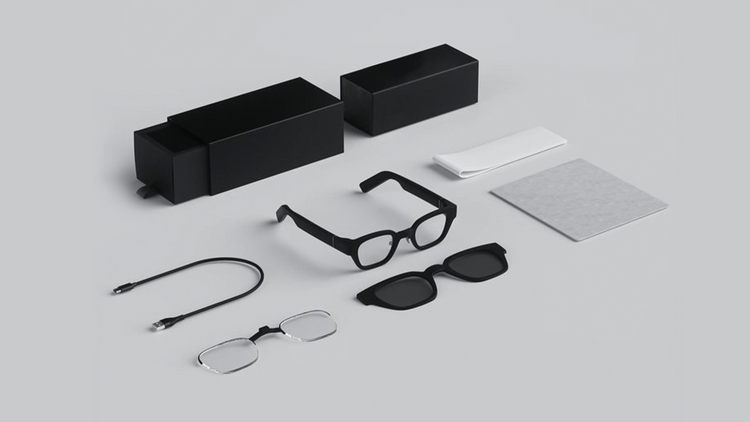
- Smart glasses with built-in captioning: Devices like Hearview’s MyVu Air use AR to display captions from a connected phone app, keeping the text aligned with the student’s line of sight.
- Interpreter or CART (Communication Access Realtime Translation): These services can be streamed to a wearable display, freeing the student from watching a separate screen.
Each option has trade-offs in cost, setup complexity, and reliability. The key is to test solutions in the actual lab environment before the semester begins.
Comparison: Caption Delivery Methods for Lab Settings
| Method | Field of View | Hands-Free? | Setup Time | Cost | Best For |
|---|---|---|---|---|---|
| Phone/tablet stand | Off to side | No (need to look) | Low | Low | Simple demos |
| Laptop with captions | Off to side | No | Medium | Medium | Group work |
| AR glasses (e.g., Hearview) | Overlaid on lab view | Yes | Medium | Higher | Hands-on experiments |
| Interpreter/CART to glasses | Overlaid | Yes | High | Highest | Complex procedures |
When choosing a solution, consider the lab’s lighting (glare can affect AR), the need for protective eyewear (some AR glasses can be worn under goggles), and the student’s comfort with wearable tech.
Where Hearview Fits: Keeping Captions in Your Line of Sight
Hearview’s MyVu Air subtitle glasses are designed to display real-time captions from a smartphone app directly in your field of view. For deaf students in a college lab, this means you can read what the instructor says while keeping your eyes on your experiment. The glasses are lightweight and can be worn under safety goggles in many cases.
It’s important to note that Hearview glasses are a tool, not a replacement for other accommodations. They work best when paired with a reliable speech-to-text app (like Google Live Transcribe or Otter.ai) and a stable internet connection. They are not medical devices and do not diagnose hearing loss. For specific medical or educational advice, consult with your audiologist or disability services office.
If you’re a student or a disability services coordinator exploring options, Hearview offers a way to keep captions where you need them—right in front of your eyes. Learn more about MyVu Air glasses.
Frequently Asked Questions
1. Can I use AR caption glasses in a chemistry lab with goggles?
It depends on the lab’s safety requirements. Some AR glasses are slim enough to fit under standard safety goggles, but you should check with your lab instructor and disability services. Over-goggle AR solutions are also emerging. Always prioritize safety: if the glasses interfere with protective equipment, use an alternative captioning method.
2. Do I need a strong internet connection for real-time captions?
Most speech-to-text apps require an internet connection for accurate transcription. If your lab has poor Wi-Fi, consider downloading offline captioning apps (though they may be less accurate) or using a dedicated mobile hotspot. Test the setup before class.
3. How do I request captioning accommodations for a lab class?
Contact your college’s disability services office well before the semester starts. Provide documentation of your hearing loss and discuss specific lab needs. They can arrange CART services, install visual alarms, or help you trial captioning glasses. It’s also helpful to talk directly with your lab instructor about your preferred communication method.
Conclusion: Plan for Accessible Lab Learning
Hands-on lab work is a cornerstone of STEM education, and deaf students deserve full access to every demonstration, instruction, and safety warning. By planning accommodations that keep captions and visual information in your line of sight—whether through AR glasses, well-placed screens, or other tools—you can focus on learning without missing a beat.
Next steps:
- Talk to your disability services office about lab-specific accommodations.
- Test captioning tools in the actual lab environment before classes start.
- Explore wearable captioning options like Hearview’s MyVu Air to see if they fit your workflow.
With the right planning, the lab can be an inclusive space where every student thrives.