
Speech-to-Text Glasses for Late-Deafened Adults: A Practical Guide

Table of Contents
- Understanding Late-Deafened Hearing Loss
- How Speech-to-Text Glasses Help
- Building a Layered Communication Routine
- Comparison of Visual Speech Support Tools
- Where Hearview Fits
- Frequently Asked Questions
- Conclusion
Understanding Late-Deafened Hearing Loss
For adults who experience hearing loss after acquiring spoken language—often suddenly or progressively—the world can feel like it has turned mute. Late-deafened adults face unique challenges: they rely on visual cues, but lip-reading is exhausting and often imprecise. While hearing aids and cochlear implants help some, others find limited benefit due to the nature of their hearing loss. This is where speech-to-text glasses enter the picture as a promising accommodation.
It is important to note that any sudden or worsening hearing loss should be evaluated by a healthcare professional. This article provides guidance on communication tools, not medical diagnosis or treatment. Always consult an audiologist or otolaryngologist for personal medical advice.
How Speech-to-Text Glasses Help
Speech-to-text glasses display real-time captions directly in the wearer's field of vision. For late-deafened adults, this means they can read what is being said without looking away from the speaker's face. This visual speech support reduces the cognitive load of trying to hear or lip-read, allowing for more natural conversations.
Key benefits include:
- Real-time captions: Spoken words appear as text within seconds.
- Portability: Wearable devices go wherever you go.
- Discreetness: Others may not even notice you are using captions.
- Integration with other tools: Can be used alongside hearing aids or cochlear implants.
However, no single tool is perfect. Speech-to-text accuracy depends on background noise, speaker clarity, and internet connectivity. That is why building a layered communication routine is essential.
Building a Layered Communication Routine
A layered routine means having multiple accommodations ready, so you can switch or combine them as needed. Here is a practical checklist:
- Medical baseline: Ensure your hearing loss is stable and you have explored medical options. Sudden changes require immediate professional care.
- Primary tool: Choose a main captioning solution, such as speech-to-text glasses, that you can wear for extended periods.
- Backup tools: Have a smartphone app (e.g., live transcribe) or a portable captioning device for situations where glasses may not be ideal (e.g., very bright sunlight).
- Environmental adjustments: Reduce background noise, use good lighting, and ask speakers to face you.
- Communication partners: Educate family, friends, and colleagues on how to best communicate with you (e.g., speaking clearly, not covering their mouth).
- Self-care: Recognize that captioning can be tiring. Take breaks and use assistive listening devices when needed.
Comparison of Visual Speech Support Tools
| Tool | Pros | Cons |
|---|---|---|
| Speech-to-Text Glasses | Hands-free, discreet, always in view | Battery life, cost, requires smartphone |
| Smartphone Apps | Low cost, widely available | Requires looking at screen, less discreet |
| Dedicated Captioning Devices | Large screen, high accuracy | Not portable, expensive |
| Lip-Reading Alone | No equipment needed | Exhausting, only 30-40% accuracy |
Where Hearview Fits
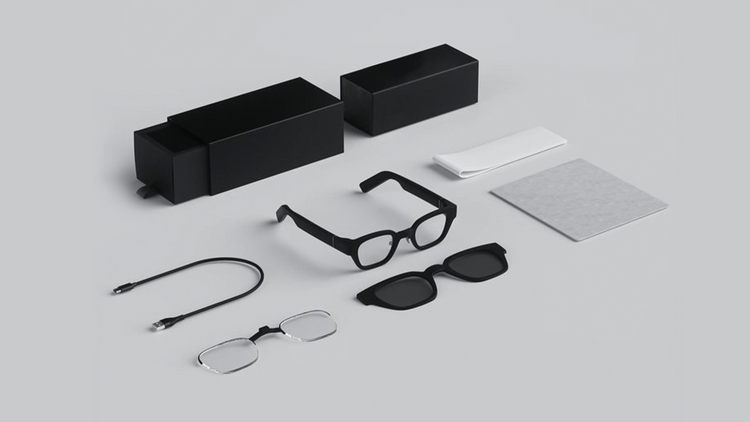
Hearview offers speech-to-text glasses designed for adults with hearing loss, including those who became deaf later in life. The glasses provide real-time captions from conversations, TV, or public announcements, displayed in your line of sight. They are lightweight and can be worn over prescription glasses.
For late-deafened adults, Hearview glasses can serve as a primary captioning tool in many daily situations—one-on-one chats, small group discussions, or watching media. They are not a medical device and do not restore hearing, but they offer visual speech support that can significantly improve understanding.
To explore how Hearview might fit into your communication routine, check out the MyVu Air Subtitle Glasses. Remember, the best approach is to combine tools and strategies that work for your specific needs.
Frequently Asked Questions
1. Can speech-to-text glasses replace hearing aids?
No. Speech-to-text glasses are an accommodation, not a medical treatment. They provide visual captions but do not amplify sound or treat hearing loss. Many users wear both hearing aids and caption glasses. Always follow the guidance of your audiologist.
2. Are speech-to-text glasses accurate in noisy environments?
Accuracy can vary. In quiet settings, they are highly accurate. In loud environments, background noise may reduce transcription quality. Some glasses use directional microphones to improve focus. It is best to test them in your typical environments.
3. Do I need a smartphone to use speech-to-text glasses?
Most models, including Hearview, require a smartphone app to process speech. The glasses connect via Bluetooth to your phone, which handles the speech recognition. Ensure your phone is compatible and has a data connection for best performance.
Conclusion
Speech-to-text glasses offer a valuable tool for late-deafened adults seeking to maintain independence and connection. They are not a cure, but a practical accommodation that can be part of a layered communication routine. Start by consulting your healthcare provider to rule out medical issues, then explore visual speech support options that fit your lifestyle.
Take the next step: research different devices, read user reviews, and consider trying a pair of caption glasses like Hearview. With the right tools and strategies, you can navigate conversations with greater confidence and ease.
Practice the Communication Plan Before You Need It
A short practice run can reveal gaps that are easy to miss on paper. Choose a low-pressure time, explain the preferred communication method, test the device or written backup, and confirm how the other person should get your attention. Check lighting, distance, background noise, battery level, connectivity, and whether important details can be reviewed in writing. If the situation involves health, employment, travel security, or safety, identify the formal accommodation or trained professional responsible for effective communication; a personal tool is only one layer. Save essential names, questions, account details, and emergency contacts where they can be reached quickly. After the interaction, note what worked and what caused confusion. Adjust the plan rather than assuming the same setup will work everywhere. This rehearsal makes speech to text glasses for late-deafened adults more predictable while preserving privacy, choice, and a reliable fallback.